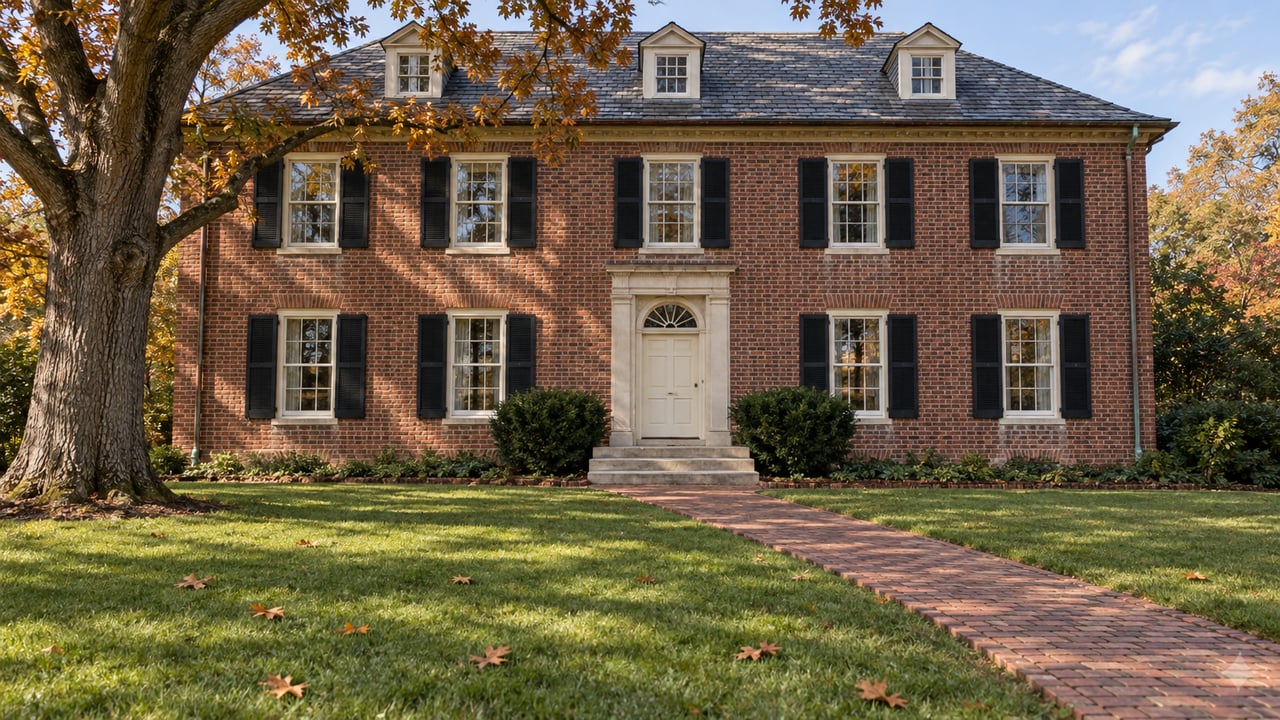
DC's homestead deduction is a modest benefit. For tax year 2026, the Office of Tax and Revenue lists it as a $91,950 reduction in assessed value, which saves $781.58 a year, and only an owner who lives in the property as their principal residence can claim it. A bill now before the DC Council would make that deduction far more consequential. Under its terms, a $3 million Spring Valley house whose owner claims the deduction would keep paying roughly what it pays today. The same house without a homestead claim would owe about $75,000 a year.
That gap matters most to buyers who expect to keep a legal residence in another state, and to Spring Valley sellers whose buyers often include them.
What Bill B26-0802 Would Tax
Ward 3 Councilmember Matthew Frumin introduced the Pied-à-Terre Property Tax Amendment Act of 2026 on September 16, 2026. It would create a new property class, Class 1C. Class 1C covers improved residential property with no more than two units, co-ops excluded, where no homestead deduction is claimed.
The bill doesn't define a second home by how many nights someone spends in it, where their mail goes, or what their tax return says. The test is whether the property carries a homestead claim. Frumin's introduction memo gives the reasoning. It describes owners who stay in the District just short of the residency test while claiming residence in a lower-tax state, and it sets the new rate at $2.50 per $100 because that is "half the vacant property tax rate, reflecting the reality that these homes are effectively vacant at least half the year." The OTR rate schedule lists vacant property at $5.00 per $100.
The bill applies only above a threshold. It starts from a $2.5 million base, indexed each year to Washington–Baltimore consumer prices measured against tax year 2024. News coverage of the bill uses $2.558 million, the same figure OTR currently lists for the existing upper residential tier.
The Higher Rate Applies to the Whole Value
The higher rate doesn't apply only to the value above the threshold, the way DC's existing "mansion" tier works. Today, OTR's Class 1B schedule taxes the first $2.558 million of a house at $0.85 per $100 and only the amount above that at $1.00. Frumin's bill takes a different approach. For Class 1C, a property assessed at or below the threshold pays $0.85 per $100, and a property assessed above it pays $2.50 per $100 on its taxable assessed value. That means the higher rate covers the whole assessment, not just the portion above the line.
Council Chair Phil Mendelson has circulated a different draft, the Taxing Second Homes in the District Amendment Act. It has not been formally introduced, and his team has described it as more of a conversation starter than a finished proposal. It keeps the marginal structure and would double the rate on value above $2.558 million, from $1.00 to $2.00 per $100.
Here is how the three approaches play out for one non-homestead house assessed at $3 million. The first row is calculated from OTR's current schedule. The other two are UrbanTurf's estimates from its September 23 comparison.
| Rate structure | How the rate applies | Approximate annual tax on a $3M assessment |
|---|---|---|
| Current Class 1B | $0.85 on the first $2.558M, $1.00 on the rest | About $26,200 |
| Mendelson draft | $0.85 on the first $2.558M, $2.00 on the rest | About $30,600 |
| Frumin bill, B26-0802 | $2.50 on the full value once over the threshold | About $75,000 |
The jump is sharpest right at the line. Using the bill's own rates, a non-homestead house assessed just under a $2.558 million threshold would owe about $21,700. A house assessed just over it would owe about $64,000. A small change in assessed value would more than double the bill, because the rate change applies to every dollar of the assessment.
The bill also requires each Class 1C owner's assessment notice to explain the classification. New York's version shows what can follow. According to UrbanTurf, New York City's Department of Finance sent letters to more than 17,000 property owners, and some of them say their New York home is their primary residence.
Spring Valley Sales Well Above the Threshold
For much of the city, $2.5 million is a high price. Spring Valley's recent sales have run well past it. The Washington Business Journal reported in September 2026 that a seven-bedroom Spring Valley home sold for a neighborhood record of $9.5 million. It had last sold in 2019 for $7.75 million.
A sale price is not an assessed value, and a sale says nothing about whether the owner claims a homestead deduction. Still, a record of $9.5 million shows how far above the threshold the top of the Spring Valley market now trades. A house can go through repeated sales and owners without ever being affected by the bill, until one owner keeps a legal residence in another state.
Citywide, the Office of Revenue Analysis estimates that Class 1C would apply to roughly 600 properties out of 371,606 District housing units. It projects more than $130 million in revenue over the four-year financial plan. In its October 22 analysis, the DC Fiscal Policy Institute put that at about $35 million a year. It described a pied-à-terre tax as an equity measure that would do little to address the District's revenue needs. The bill would affect few properties, but each affected owner would face a large increase.
Exemptions in the Bill
As introduced, the bill lists four situations in which Class 1C would not apply, provided the owner proves the facts to the Mayor:
- Construction. Work on the property keeps anyone from living there for six months or more during the tax year. This exemption can be claimed in no more than two out of every five years.
- Long-term rental. A tenant pays market rent for at least nine months of the year, the owner doesn't occupy the property on any day of the year, and a rental housing business license may be required.
- Listed for sale or rent. The property is marketed at market rates for no more than nine months of the year, and the owner doesn't occupy it on any day.
- Certain federal officials. This covers elected federal officers and certain legislative staff, Senate-confirmed presidential appointees who serve at the President's pleasure, and Supreme Court justices, unless they are domiciled in the District during the year.
Mendelson's draft has similar categories with different limits. It exempts homes listed for sale or rent for up to six months instead of nine. That difference affects a seller who leaves a Spring Valley house empty while it's on the market. Under the six-month limit, a slow fall listing could lose the exemption before it sells.
Where the Bill Stands in November
The bill was referred to the Committee of the Whole on September 22, and the Council's legislative record still lists it as under Council review, with Frumin as the sole introducer. On October 16, the Committee of the Whole held a public hearing on revenue proposals that included a new pied-à-terre tax. The Washington Post reported that the Council weighed seven tax-raising ideas at that hearing, several of them mainly affecting wealthier residents.
UrbanTurf reported that Mendelson told reporters no tax increase would come to a vote this fall. The same report noted the DC Auditor's projection that District tax revenue would fall from $12.2 billion to $11.8 billion this fiscal year. As written, the new Class 1C rates would start in tax year 2027. For anyone buying or selling in Spring Valley this winter, the bill is a pending proposal with a large possible cost.
Questions From Buyers and Sellers
Does the bill change taxes for a Spring Valley owner who lives in the house full time?
The Class 1C definition applies only where no homestead deduction is claimed. An owner who occupies the house as a principal residence and claims the deduction would stay in the existing rate classes.
Are condos and co-ops covered?
The introduced text applies to residential property with no more than two units and excludes co-ops.
Will the threshold stay at $2.5 million?
No. The bill indexes it to Washington–Baltimore consumer prices each year and rounds it down to the nearest $1,000.
Could the rate structure change before a vote?
Yes. Mendelson's draft already proposes a different structure, and the bill has not come out of committee.
This post is general information about a pending bill, not legal, tax or financial advice. Anyone whose ownership or residency plans could be affected should review their situation with a qualified tax professional or attorney.
For buyers who plan to keep a residence elsewhere, and for sellers whose buyers often do, a proposal like this belongs in the conversation about price and timing well before an offer is written. If you're weighing a Spring Valley purchase or sale while B26-0802 is pending, The K Team can go through the timing and terms with you. Contact Us.